

Before Lotus there was Intermetrics Inc. Or for those close to it, I². Intermetrics was founded around the time Neil was taking one small step for mankind by John Miller, Jim Miller, Ed Copps, Jim Flanders and Dan Lickly. They believed the projects for Draper from NASA would slow down so they decided to try and commercialize what they had developed at Draper and perhaps find the next Apollo.
I am not trying to attempt a perfect history lesson but to relive some great memories and share what I know about a unique place. If you want a more detailed insider perspective read Tony’s history here.
Intermetrics first location for few months was on Main St.for 2 months
but soon relocated to offices on Green street in Cambridge right next to the police station. I can even remember that if you looked out the right window you could look down into cells in the police station. Pretty cool stuff when you are a kid.
Intermetrics landed contracts with NASA for developing software particularly the compiler HAL for the space shuttle.
Eventually they moved to fresh pond, long before Whole Foods but certainly in the era of Ma McGoo’s (awesome meatball subs) and the Hideaway (cheap pool tables).
Over time they refurbished an old warehouse at 733 Concord Ave into what is considered now a classic startup environment, wood beams, sky lights, & cool interior. Way ahead of their time.
One of the interesting aspects for them was recruiting. Computer Science wasn’t really something that was taught back then so how do you recruit programmers? Well, I wasn’t there but I’d like to think that my father developed a unique style of recruiting due to these circumstances (though I am not positive). He was known to interview people and speak very little about the actual job and had been known to take people out to his car to diagnose engine issues (Howie Marshall). In fact, legend has it that if he talked about computers with you then you weren’t going to get hired.
I remember fondly spending time at 745 Concord Ave, drinking sprite out of the bottle and playing one of the first puzzle computer games Adventure. “It was a dark and stormy night”… to this day if I drink a Sprite out of a bottle I am taken right back there.
In fact, I believe it was in this building that John Miller made one of his infrequent visits and to his chagrin found hand prints high on the walls of the corridors and couldn’t understand how they got there…. they were learning how to ride unicycles! Duh!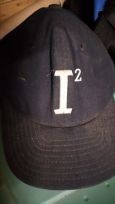
They hired really smart people as they had a pipeline to M.I.T and also one to Cal Tech. Besides being very very bright they also attracted people with, um, er character!
In a previous post I talked about Intermetrics softball which given the environment seemed a highly unlikely place to foster a championship softball team, a competitive “Go” team sure, softball??
Juggling, backgammon, GO were all common place.
For the entire Apollo team, I can only imagine trying to find the next Apollo, there really wasn’t going to be that opportunity. The shuttle might have seemed like that next great thing but nothing was going to compare to the race to put a man on the moon.

 So you would put the cards through a punch card printer, which would then print out the card data, on large sheets of green continuous feed paper. You could then review what you created on your cards. Of course, we know that programmers always write code correctly the first time, so no need to go back and re-punch any cards or print out again and validate. So, once you have all the cards just the way you want them, you would then put them in a punch card reader with some control cards which would tell the general computer what you were doing and where to put it. It would call up the YUL assembler which was specially written to take source code and produce Apollo Guidance Code (AGC). Of course, you actually do all this on a simulator first, which you would run many many times before actually getting it onto the AGC computer.
 r Algorithmic Language Shuttle. Supposedly this name was given by Ed Copps in honor of Hal Laning of the Instrumentation Lab, who developed the first language compiler anywhere, a system of guidance algorithms, was basically brilliant and was a geeks geek. Seriously, this guy is fascinating, check out



 alicklystory.com